Building Scalable Web Applications
Architecture patterns and best practices for building web applications that grow with your business.
Why Scalability Matters in 2025
By April 2025, businesses of all sizes face the same digital reality: if your application cannot scale, your growth will stall. From startups serving niche markets to mid-sized firms expanding globally, customers expect speed, reliability, and seamless experiences—even during peak traffic surges.
A scalable web application ensures that your infrastructure grows alongside your business without constant rebuilds. Done right, scalability translates into lower costs, higher performance, and happier users.
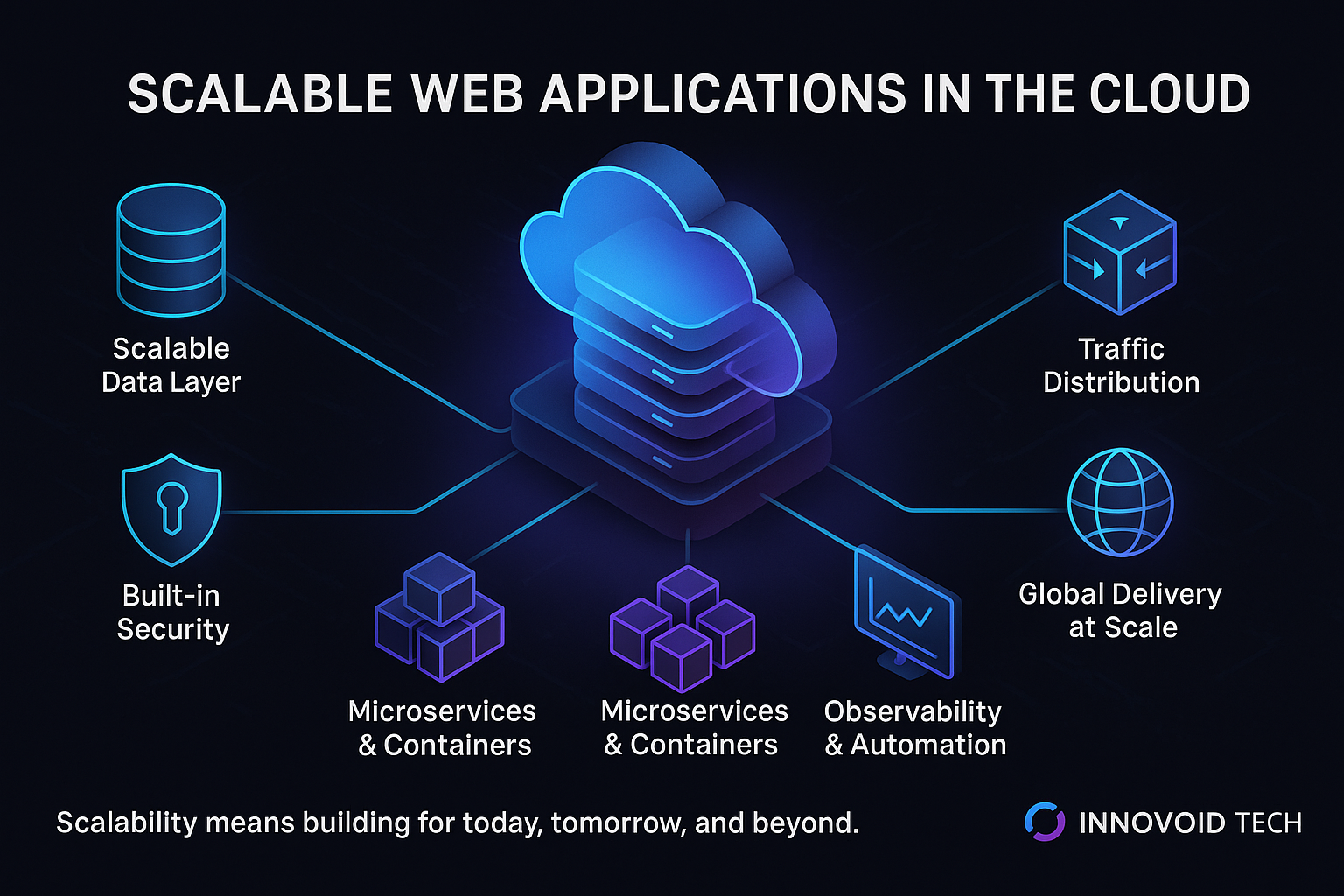
Modern web applications require robust architecture to handle growth and scale efficiently
1. Choose the Right Architecture Pattern
Your architecture is the foundation of scalability. Popular patterns include:
Microservices Architecture
Breaks applications into independent services connected via APIs.
Pros:
- • Flexibility
- • Fault isolation
- • Team autonomy
Cons:
- • Added complexity in orchestration
- • Monitoring challenges
Serverless / Function-as-a-Service (FaaS)
Runs code in event-driven, pay-as-you-go environments (AWS Lambda, Azure Functions).
Pros:
- • Automatic scaling
- • No server management
Cons:
- • Vendor lock-in
- • Cold start latency
Monolith with Modular Design
A single codebase structured into clear modules.
Pros:
- • Simpler for small teams
- • Easier to start
Cons:
- • Harder to scale once traffic surges
Pro Tip: Start small with modular design, evolve to microservices or serverless as demand grows.
2. Prioritize Database Scalability
Databases are often the bottleneck in scaling. Best practices:
- Horizontal scaling: Use sharding or replication to distribute load.
- Polyglot persistence: Choose the right database for each service (SQL for transactions, NoSQL for unstructured data).
- Caching: Implement Redis or Memcached to reduce read loads.
- Connection pooling: Avoid excessive database connections from high-traffic apps.
3. Embrace Cloud-Native Infrastructure
Cloud platforms in 2025 offer built-in scalability features that SMBs can leverage without heavy overhead.
- Containers and Orchestration: Use Docker + Kubernetes (K8s) for portability and autoscaling.
- Load balancing: Distribute requests across multiple servers for reliability.
- CDNs: Cache content at the edge (Cloudflare, AWS CloudFront) to reduce latency.
4. Design for Performance from Day One
Scalability is not just about adding servers—it's about writing efficient code.
- Asynchronous processing: Offload heavy tasks to queues (RabbitMQ, Kafka).
- Lazy loading: Load content only when needed.
- Minified assets & compression: Reduce front-end payloads.
- API versioning: Avoid breaking changes as you grow.
5. Build with Security and Compliance in Mind
Scaling insecurely is a recipe for disaster.
- Zero-trust principles: Authenticate every request.
- Rate limiting: Protect APIs from abuse.
- Encryption: Secure data in transit and at rest.
- Compliance frameworks: Follow GDPR, HIPAA, or SOC2 as applicable—your future customers will expect it.
6. Monitor, Test, and Automate
Visibility ensures you scale proactively, not reactively.
- Monitoring: Use observability tools (Prometheus, Grafana, Datadog) for metrics and logs.
- Load testing: Simulate peak traffic before it happens (JMeter, Locust).
- CI/CD pipelines: Automate deployments for faster iteration without downtime.
- Chaos testing: Intentionally break systems to test resilience.
7. Keep Costs Under Control
Scalability should save money, not explode budgets.
- Autoscaling groups: Scale up only when demand rises.
- Reserved instances/savings plans: Optimize for predictable workloads.
- FinOps discipline: Monitor cloud costs alongside performance metrics.
The Forward View
In April 2025, building scalable web applications is no longer a challenge reserved for enterprise tech giants. With modern cloud-native tools, AI-driven optimization, and proven architecture patterns, small businesses can scale like enterprises—without enterprise overhead.
At Innovoid Tech, we help growing companies design web applications that evolve with their needs, ensuring they remain resilient, secure, and cost-effective as they expand into new markets.
Ready to Build Scalable Applications?
Let Innovoid Tech help you design and build web applications that grow with your business, using proven architecture patterns and modern cloud technologies.
Get Started Today